
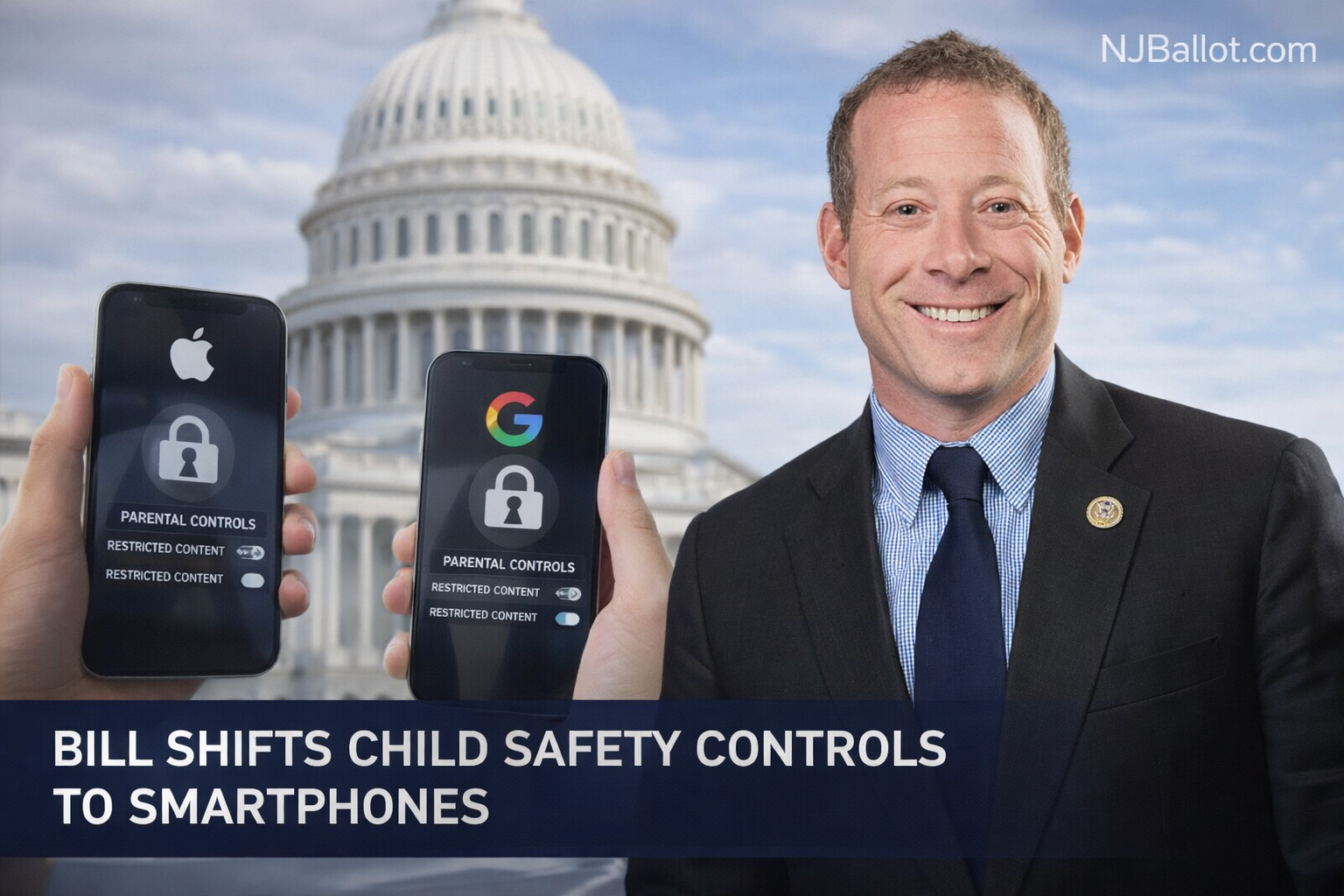

New Jersey Rep. Josh Gottheimer wants to change how parents control what their children see online—by moving the responsibility from individual apps to the operating systems that power every smartphone.
WASHINGTON, D.C.—New Jersey Representative Josh Gottheimer (D-05) introduced legislation on April 13 that would shift online age verification from individual apps to operating systems. In the process, the bill defines the term “operating system” broadly enough to capture laptops, tablets, and potentially open-source distributions, not just smartphones.
The bill, designated H.R. 8250 and titled the "Parents Decide Act," has attracted one cosponsor: Republican Representative Elise Stefanik of New York. Her participation gives the bill a bipartisan edge as the legislation enters committee review. The measure was referred to the House Committee on Energy and Commerce on the date of introduction.
Gottheimer framed the proposal as a parental empowerment tool. "Parents should decide what apps their kids can download, what content they can see, and how they interact online—not algorithms or tech companies," he said in a House.gov press release. Stefanik echoed the sentiment, stating the bill would "put parents back in the driver's seat" regarding children's digital content access.
State Precedents and Federal Expansion
The legislation follows similar state-level frameworks rather than breaking entirely new ground. California enacted AB 1043 in October 2025, mandating OS-level age verification effective January 1, 2027. Colorado's SB26-051, which passed the state Senate 28-7 on March 3, 2026, contains nearly identical provisions and awaits House consideration. Gottheimer's federal proposal would nationalize these approaches, creating uniform standards where state patchwork currently exists.
Regulatory Scope and Industry Structure
By targeting the operating system layer rather than individual platforms, the bill would centralize age verification and parental controls at the device level. New York’s SAFE for Kids Act (S.7694-A, enacted June 2024) regulates social media platforms hosting addictive feeds, such as algorithmic content recommendation systems. It requires age verification for access to personalized content streams.
Gottheimer's bill shifts responsibility upstream, mandating that operating systems verify ages during initial account creation and pipe that data securely to apps via application programming interfaces.
The statutory language defines "operating system" as software that supports the basic functions of a computer, mobile device, or any other general purpose computing device. That broad phrasing sweeps in desktop operating systems, tablets, and potentially open-source distributions.
Financial Holdings and Sector Exposure
Financial disclosure records reveal Gottheimer purchased between $550,001 and $1,100,000 in Microsoft Corporation call options on March 25, 2026—just nineteen days before introducing H.R. 8250. The positions include options struck at $320 and $325 that expire June 18, 2026. He sold smaller Apple positions in early 2025; no recent Google or Alphabet transactions appear in publicly disclosed trading reports as of April 2026.
Gottheimer served as General Manager of Corporate Strategy at Microsoft from 2012 to 2015 and he currently co-chairs the House Commission on Artificial Intelligence. While the bill applies to iOS, Android, and Windows equally, Gottheimer’s substantial Microsoft holdings create the appearance of a conflict of interest in the sector he now proposes to regulate, regardless of his actual intentions. Microsoft receives no unfair edge under the terms of the bill, but the legislation itself gives a boost to tech stocks across the board.
Implementation and Enforcement
The bill establishes a specific implementation framework through the Federal Trade Commission. Section 2(b) provides a safe harbor shielding operating system providers from liability if they follow statutory and regulatory requirements.
The legislation takes effect one year after enactment, with the FTC required to promulgate comprehensive regulations within 180 days. These rules must establish data protection standards ensuring date of birth information is "collected in a secure manner" and protected from theft or breach. The bill explicitly mandates that operating systems allow parents to "control what such user is allowed to access on a device."
Enforcement falls to the FTC under existing authority: the Commission applies "the same jurisdiction, powers, and duties as though all applicable terms and provisions of the Federal Trade Commission Act were incorporated," meaning no dedicated congressional appropriations are required. The Commission must draw enforcement funding from existing budgets.
Political Headwinds?
The bipartisan pairing with Stefanik provides political cover against charges of government overreach, though the coalition remains fragile. With only one cosponsor, the bill faces long odds absent a catalyzing event involving minors and artificial intelligence or social media.
Insert: "The legislation's trajectory depends heavily on Energy and Commerce Committee dynamics, where neither Gottheimer nor Stefanik serve. The committee maintains broad jurisdiction over telecommunications, consumer protection, and interstate commerce; New Jersey Representatives Tom Kean Jr. (R-07) and Rob Menendez Jr. (D-08), along with Ranking Member Frank Pallone Jr. (D-06), will determine whether their home-state colleague's bill advances.
H.R. 8250 represents a structural shift in digital age verification, moving compliance from apps to operating systems while embedding parental controls and safe harbor protections directly into federal statute. Whether the bipartisan pair can advance the measure through committee will determine if the Parents Decide Act becomes the national standard that Gottheimer envisions or simply stalls in committee.
Related Articles
• Gottheimer Shifts Position to Match NJ Delegation on Iran War Powers Vote
Sources
• Representative Josh Gottheimer, House.gov, "RELEASE: Gottheimer Announces Bipartisan 'Parents Decide Act'" (April 2, 2026).
• Congress.gov, "H.R.8250 — Parents Decide Act," 119th Congress legislative database entry (April 13, 2026).
• GovTrack.us, "Text of H.R. 8250: Parents Decide Act" (April 13, 2026).
• New York State Senate, S.7694-A, "Addictive Social Media Platform Child Protection Act" (enacted June 20, 2024).
• Rockefeller Institute of Government, "Understanding New York's SAFE for Kids Act and the Online Protection for Kids Act" (March 19, 2025).
• It's Foss News, "Gottheimer's 'Parents Decide Act' Wants Apple & Google to Verify Age at OS Level" (April 15, 2026).
• House Clerk, U.S. House of Representatives, Periodic Transaction Report for Rep. Josh Gottheimer (filed April 8, 2026).
• House Clerk, U.S. House of Representatives, Periodic Transaction Report for Rep. Josh Gottheimer, Apple Inc. sales (February 3, 2025; February 24, 2025; April 9, 2025).
• Insider Signals, "A Former Microsoft Executive on the House Intel Committee Just Bought $1.1 Million in MSFT Calls Five Weeks Before Earnings" (April 14, 2026).
• Unusual Whales, Congressional trading database, Rep. Josh Gottheimer MSFT options entries (March 25, 2026).
• Quiver Quantitative, "Josh Gottheimer — Microsoft Corporation" financial disclosure analysis (April 2026).
• WRNJ Radio, "Gottheimer unveils bipartisan bill to strengthen online protections" (April 2, 2026).
• U.S. House of Representatives, Rules of the House, "Jurisdiction of the Committee on Energy and Commerce."