
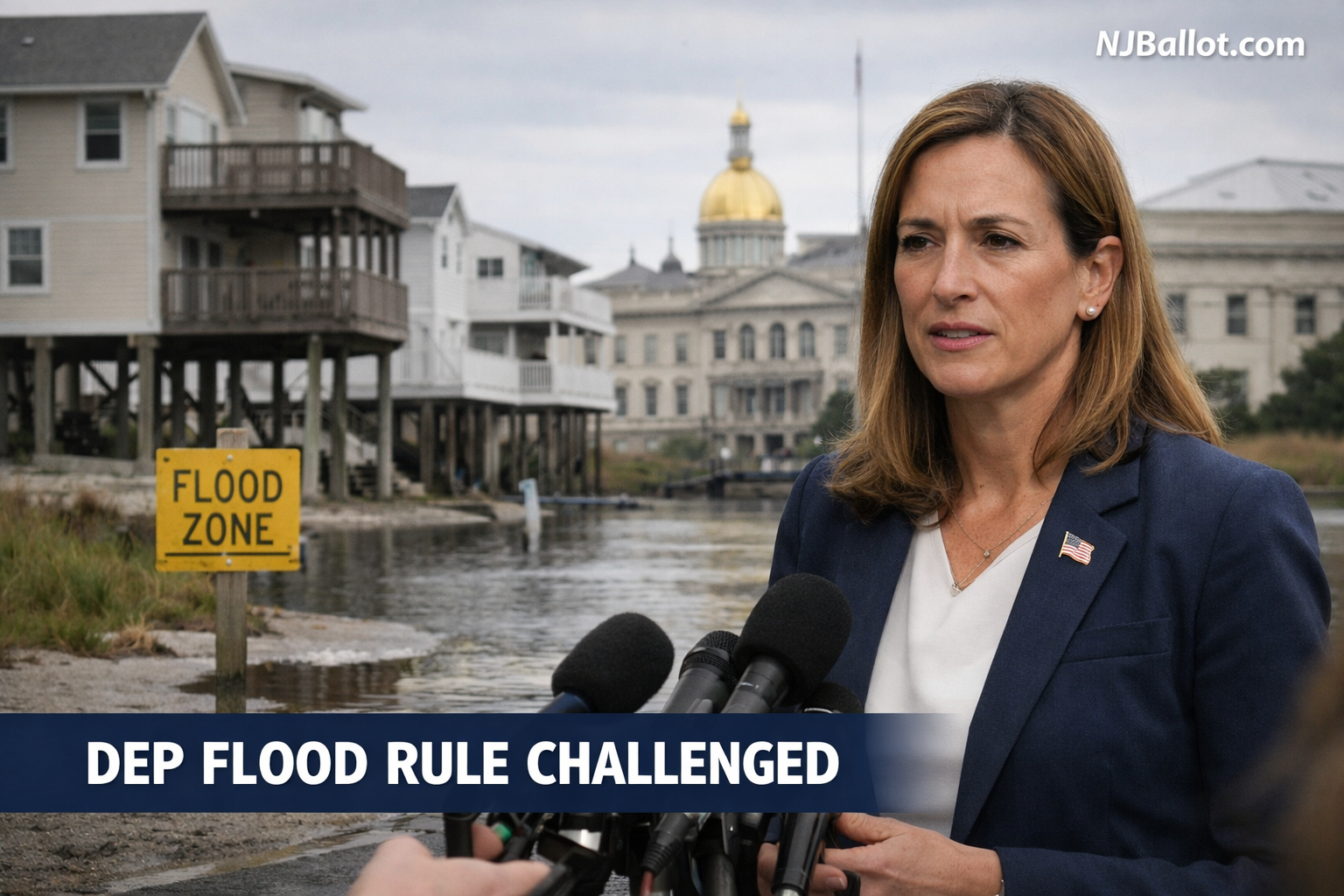

TRENTON—The New Jersey Department of Environmental Protection adopted the Resilient Environments and Landscapes rule in January to address sea-level rise along the Jersey Shore. It requires new structures to be built four feet higher than FEMA's base flood elevation and expands the state's flood hazard area from 16% to approximately 17% of New Jersey's land. The regulation takes effect July 20, 2026.
Recently, Ocean, Cape May and Monmouth Counties have filed a notice of appeal challenging the measure. Senate President Nick Scutari introduced a resolution February 24 calling for the rule's withdrawal, saying it is inconsistent with legislative intent and will drive up housing costs. He said the requirements exceed FEMA recommendations.
Governor Mikie Sherrill could reverse the policy administratively because it is not a law. Her office did not respond to requests for comment on March 6.
Anjuli Ramos-Busot, New Jersey Sierra Club state director, called the policy a game changer that requires proactive measures to protect people from climate change. Allison McLeod of the New Jersey League of Conservation Voters said it provides an economic boon through resilience, citing Stafford Township, where elevated homes saved policyholders over $1 million annually in flood insurance costs. The Sierra Club is citing Sherrill's congressional record on flood policy to pressure her to keep the regulations.
Opponents say the requirements will have devastating economic impacts. Ray Cantor of the New Jersey Business and Industry Association called them an extreme measure. Cape May Mayor Zachary Mullock said the burden on households will be significant, and noted that historic Victorian-era homes cannot easily be put on stilts. Developer Chris Birchler of Ocean County said permitting delays and clerical costs will stagnate the market. Ocean County Commissioner Frank Sadeghi said the policy could stop development and reduce property values.
The regulations create Inundation Risk Zones, where standing water is projected due to sea-level rise, and they prioritize nature-based solutions like living shorelines. Rutgers University, NOAA and the IPCC provided scientific projections showing levels are expected to rise 2.2 to 3.8 feet by 2100 under intermediate scenarios, or 4.5 feet with rapid ice-sheet loss. New Jersey's warming rate is faster than the rest of the Northeast and its sea level is rising at least twice as fast as the global average.
Hurricane Sandy caused $30 billion in damages and 40 deaths in 2012. Hurricane Ida killed more than 25 people and caused billions in damages in 2021. The state has experienced at least two feet of sea-level rise since 1900.
Affordable housing developers can receive exemptions based on compelling public need, though Jennifer Coffey of the Association of New Jersey Environmental Commissions criticized this as unconscionable. The New Jersey Business and Industry Association and New Jersey Builders Association filed a separate legal challenge on March 7, claiming the policy is arbitrary, capricious and unreasonable. They represent about 7,000 business members.
The challenges create uncertainty for developers and homeowners. The outcome may depend on whether Governor Sherrill chooses to defend or modify the regulations.
Sources
NJ.com. "Jersey Shore Counties Challenge DEP Sea-Level Rise Rule." March 6, 2026.
New Jersey Department of Environmental Protection. "Resilient Environments and Landscapes Rule." January 20, 2026.
Rutgers Bloustein School of Planning and Public Policy. "NJ PACT Rules Analysis." January 23, 2026.
Kleinfelder. "New Jersey PACT REAL Rule Technical Summary." March 5, 2026.
Ocean County Government. "Press Release: Sea-Level Rise Rule Challenge." March 5, 2026.
New Jersey Department of Environmental Protection Coastal Management Program. "Federal Coastal Management Document." December 19, 2025.