
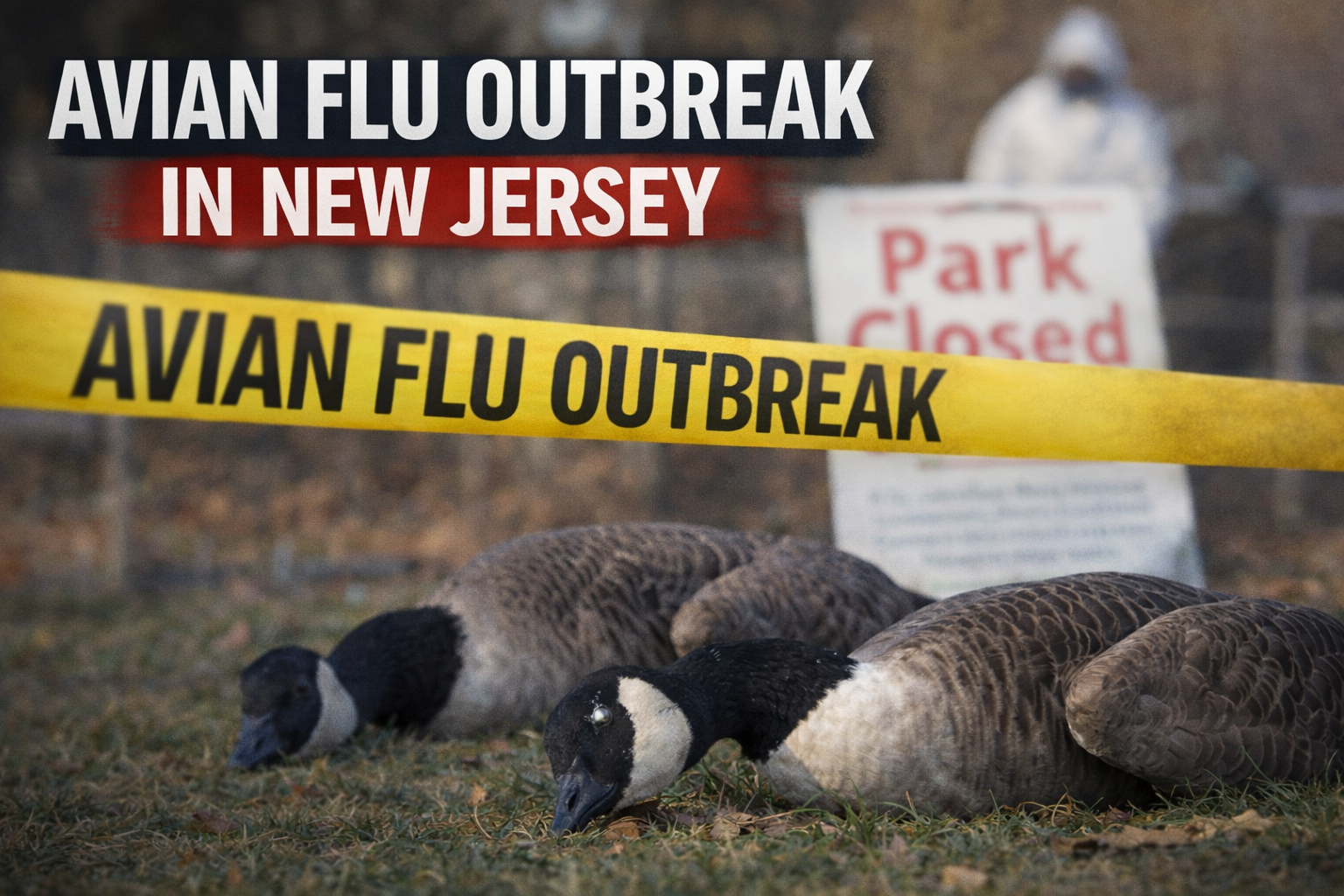

A significant outbreak of Highly Pathogenic Avian Influenza (HPAI), commonly known as bird flu, is affecting wild bird populations across New Jersey, prompting park closures, increased surveillance and renewed calls for public caution.
Between Feb. 14 and 16, 2026, more than 1,100 dead or sick wild birds were reported to the New Jersey Department of Environmental Protection (NJDEP), with the vast majority identified as Canada geese. The outbreak has spread widely, with confirmed or presumptive cases reported in at least 12 counties, including Atlantic, Bergen, Burlington, Camden, Cape May, Cumberland, Essex, Hunterdon, Middlesex, Monmouth, Salem, Somerset, Sussex and Warren.
The current outbreak represents a sharp escalation in bird deaths across the state. Between August 2025 and Feb. 17, 2026, New Jersey Fish and Wildlife confirmed bird flu detections in Bergen, Burlington, Middlesex, Monmouth, Salem, Somerset, Sussex and Warren counties, with preliminary detections in Atlantic, Cape May, Cumberland, Essex and Hunterdon counties.
In January 2026, a commercial bird farm in Burlington County confirmed a case of HPAI, prompting state and federal partners to take swift action. The farm was quarantined and will not receive new poultry until the quarantine is lifted following thorough cleaning and disinfection.
The virus responsible for these outbreaks is Highly Pathogenic Avian Influenza H5N1, specifically a strain belonging to clade 2.3.4.4b that has become dominant globally. This strain is highly contagious and often fatal in domestic poultry species.
Migratory birds are the primary carriers. Wild aquatic birds — especially waterfowl such as ducks and geese — are natural reservoirs for avian influenza viruses. They can carry HPAI H5N1 along migratory flyways without showing significant signs of illness, shedding the virus in feces and respiratory secretions. This can contaminate water, soil and feed, creating environmental reservoirs to which domestic flocks may be exposed. According to wildlife officials, migratory waterfowl congregating in limited open water sources during a recent cold snap created ideal conditions for rapid disease spread.
The virus spreads through:
Direct contact with infected birds or their droppings, secretions or contaminated environments
Indirect contact via vehicles, equipment, shoes or clothing
Handling raw poultry or eggs from infected birds
The New Jersey Department of Agriculture emphasizes that HPAI spreads through contact with bodily secretions, including fecal, ocular, nasal or oral discharges from infected birds.
The public health risk remains low, according to multiple health agencies. CDC influenza surveillance systems show no indicators of unusual influenza activity in people, including avian influenza A(H5). Between February 2022 and Jan. 31, 2026, more than 31,900 people exposed to infected animals have been monitored, with more than 1,300 tested for novel influenza A viruses. To date, no human cases of H5N1 have been reported in New Jersey. Human infections with avian influenza are rare and typically occur only after close, unprotected contact with infected birds or contaminated environments.
Who is at higher risk?
People with prolonged close contact with sick or dead birds
Poultry industry workers
Individuals who have contact with infected dairy cattle
Household pets such as cats and dogs
The NJDEP Fish and Wildlife, together with the U.S. Department of Agriculture’s Animal and Plant Health Inspection Service, is working with local officials to provide guidance on the safe removal and disposal of dead birds. Testing is prioritized in areas where the virus has not been recently detected or near poultry facilities.
New Jersey Secretary of Agriculture Ed Wengryn stated: “The New Jersey Department of Agriculture remains vigilant in protecting our poultry industry. Surveillance measures are always ongoing as we constantly monitor and test to detect any signs of avian influenza early.”
Local municipalities are closing affected parks and working with the state to remove carcasses safely. In Pitman, Betty Park and Alcyon Park were closed after dead geese were discovered. Landfills across the state have been coordinated to accept dead birds.
Officials urge the public to report sightings rather than handle birds. If you see sick or dead wild birds:
Report through the NJDEP Wild Bird Disease Reporting Form
For sick or dead domestic poultry, contact the New Jersey Department of Agriculture, Division of Animal Health, at 609-671-6400
For suspected human cases or flu-like symptoms, contact your local health department
Sources
NBC New York – Bird flu sick geese in New Jersey
NJ 101.5 – South Jersey presumptive bird flu cases
Camden County Government – Camden County monitoring presumptive bird flu across state
NJ.com – More than 1,100 geese turn up dead or sick in NJ: here’s why
WHYY – Bird flu in New Jersey and Pennsylvania: farm protections
New Jersey Department of Agriculture – Press release (January 22, 2026)